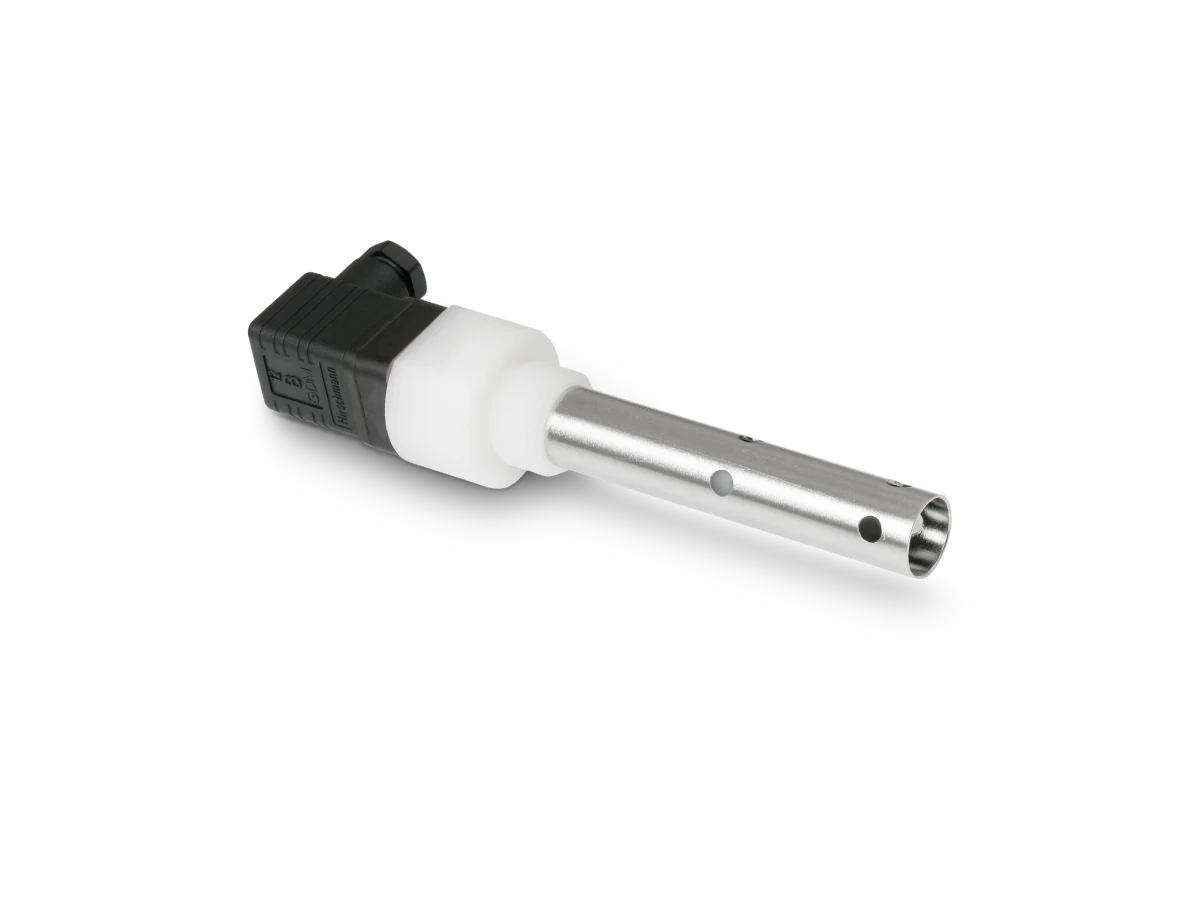
Product Overview
Conductivity sensors typically consist of a robust field‑mounted probe that is immersed in the process stream and a transmitter module that conditions the sensor signal, compensates for temperature effects, and outputs the measurement in a SCADA‑compatible form such as 4–20 mA, Modbus RTU, HART, or RS‑485. Many modern sensors are designed with integrated temperature compensation via built‑in RTD elements like Pt100, ensuring that conductivity readings are stable and accurate regardless of changes in process water temperature.
Conductivity measurements are especially important in water treatment because they help operators detect a wide range of process upsets — for example, membrane fouling or scaling in RO units, saltwater intrusion in freshwater sources, or undesired concentration changes in chemical dosing systems. When connected to a SCADA system, conductivity data can be visualized in real time on operator dashboards, used for trend analysis, and tied into logic that triggers alarms or automatic corrective actions such as adjusting chemical dosing pumps or diverting flows. The ability to integrate conductivity measurement with a SCADA platform enhances overall process transparency and control, reducing manual sampling and error.
Conductivity sensors and transmitters are offered in different measuring principles — conductive (typically two or four electrodes) for general water applications, and inductive (toroidal) for heavily contaminated or industrial wastewater streams where electrodes might foul. Sensor bodies are often constructed from durable materials such as PVDF, stainless steel or corrosion‑resistant alloys, ensuring reliable long‑term operation in harsh environments with minimal maintenance.
When deploying a conductivity sensor in a SCADA system, proper installation is critical: sensors are commonly mounted in flow‑through chambers, bypass loops, or direct insertion points in pipe networks. The transmitter, often panel‑mounted or DIN‑rail installed in a control cabinet, interfaces directly with PLCs or RTUs. Once integrated, the sensor becomes part of the SCADA process loop, providing continuous conductivity data that helps operators optimize treatment performance, ensure compliance with discharge permits, and guarantee safe drinking water quality.