Product Overview
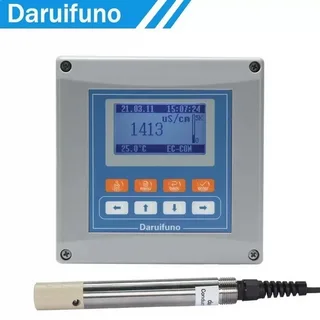
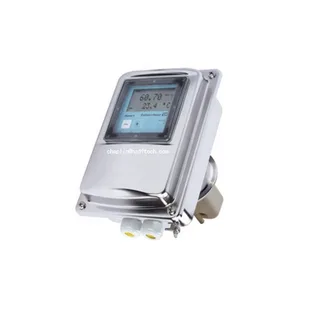
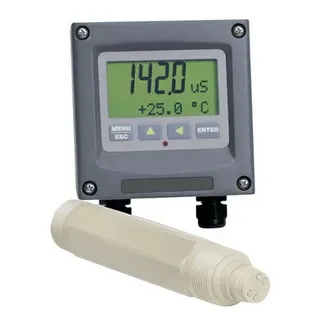
Industrial conductivity transmitters are typically installed alongside dedicated conductivity probes or sensors (two‑electrode or four‑electrode designs) within the process stream. The sensor measures the ability of water to conduct electrical current, which varies with the concentration of dissolved ions. The transmitter conditions this raw signal, applies temperature compensation, and outputs a robust signal such as 4–20 mA, HART, Modbus RTU, or RS‑485, depending on the model and system architecture. These standardized outputs allow seamless integration into SCADA systems for monitoring, alarm logic, and automated control strategies.
In a typical SCADA environment, continuous conductivity data provide several key benefits. First, they allow real‑time assessment of water quality at critical points — for instance, at raw water intake, post‑treatment, or before distribution. Sudden changes in conductivity can indicate contamination events, membrane fouling, saltwater intrusion, or chemical dosing imbalances. SCADA software can be programmed to trigger alarms, adjust dosing pumps, or initiate cleaning cycles based on pre‑defined conductivity thresholds, improving operational efficiency, safety, and resource optimization. Historical conductivity trends also support reporting, compliance tracking, and process optimization efforts.
Conductivity transmitters are designed for industrial environments, with rugged housings, corrosion‑resistant materials, and often IP65/IP67 protection to ensure reliable performance in wet, humid, or chemically aggressive conditions. Maintenance is minimized through features such as diagnostic alerts, automatic temperature compensation, and easy field calibration. These features reduce downtime and provide consistent, accurate readings that are crucial for automated control logic in SCADA systems.
Alfa Laval Conductivity Transmitter Catalog (English PDF) https://pdf.directindustry.com/pdf/alfa-laval/alfa-laval-conductivity-transmitter/16602-901414.html