Product Overview
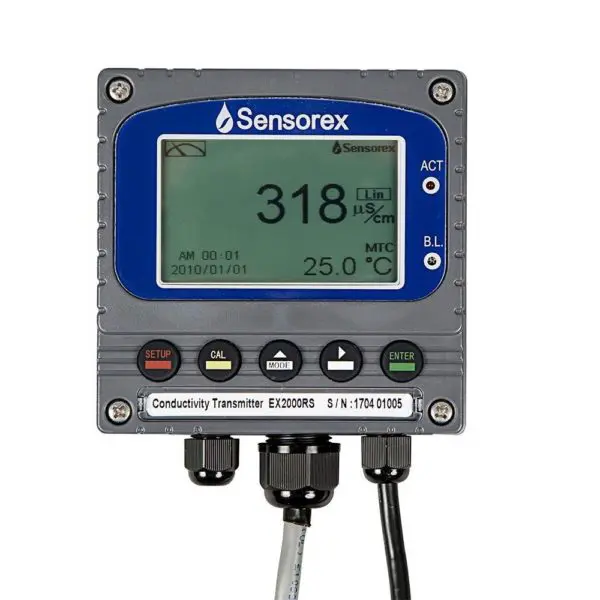
Physically, the pH transmitter typically comprises a field-mounted circuitry enclosure with a high-resolution digital display and menu navigation buttons, and a separate pH sensor (electrode) that is submerged in the process water stream. The sensor measures the voltage generated by the hydrogen ion activity in the water, which the transmitter converts into a standardized pH value. These units are engineered to handle demanding industrial conditions such as humidity, temperature fluctuations, and electrical noise from large motors or nearby equipment. Many models support 4–20 mA analog outputs, Modbus RTU over RS-485, and sometimes HART protocol, ensuring seamless integration into SCADA systems using industry-standard communication protocols.
In practical applications, the pH transmitter is deployed at critical points in the process flow — for example, at the influent/raw water intake, after coagulation/flocculation tanks, before disinfection stages, and at final effluent discharge points. By monitoring trends and instantaneous deviations, the SCADA automation system can trigger corrective actions such as adjusting chemical dosing pumps (acid, caustic, coagulants), opening or closing control valves, enabling cascade alarms or initiating interlocks if pH drifts outside safe or regulatory limits. This enables proactive process control, enhances water quality consistency, and reduces manual sampling and laboratory costs
Integration with SCADA software permits visualization of the pH values on real-time dashboards, historical trend charts, alarm summaries, and automated reporting tools. Operators and engineers can set upper and lower pH setpoints, receive instant alerts when thresholds are exceeded, and track long-term water quality patterns to optimize chemical usage and treatment efficiency. When combined with other analytical transmitters such as conductivity, ORP, or dissolved oxygen sensors, the pH transmitter contributes to a comprehensive water quality monitoring package that enhances treatment plant performance while complying with stringent environmental regulations.
Overall, industrial pH transmitters are indispensable components in the SCADA-enabled automation of modern water treatment plants — delivering reliable, continuous pH measurement that supports automated decision-making, process optimization, and system reliability.