Product Overview
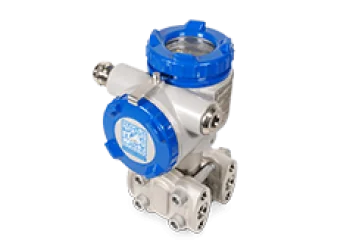
Industrial pressure transmitters are engineered for industrial environments, featuring robust housings with high IP (Ingress Protection) ratings and corrosion‑resistant construction suitable for wet, humid, and aggressive conditions found in water treatment facilities. The sensing element inside the transmitter is typically based on piezoresistive or capacitive silicon technology, providing excellent accuracy, repeatability, and long‑term stability, often down to ±0.1–0.25 % full scale. Models for water treatment applications support a broad range of pressure measurements — from low pressure used in level monitoring or small pump suction lines, to higher pressure measurements in process reactors or distribution networks.
In a typical SCADA automation architecture, the pressure transmitter enables real‑time data acquisition and control: the sensed pressure is converted to an industrial signal such as 4–20 mA (analog) or digital protocols (Modbus, RS‑485, HART). These signals flow into PLCs or RTUs (Remote Terminal Units), which relay the data to the SCADA server for visualization, trending, alarm handling, and historical archiving. Real‑time pressure data are essential for tasks such as pump performance monitoring, preventing over‑pressure or under‑pressure events, detecting leaks, ensuring proper filter operation, and maintaining safe distribution pressures throughout the plant infrastructure.
One of the key advantages of deploying digital pressure transmitters with protocols like Modbus RTU or HART is enhanced communication capability — they can offer onboard diagnostics, configuration options, and multi‑parameter reporting that improves system visibility and reduces manual maintenance. This makes them particularly valuable for SCADA environments where remote monitoring and automated decision logic improve reliability and reduce operational risks.
These transmitters are also used for hydrostatic level measurement, where pressure is measured at the bottom of a tank or reservoir and converted to level information, making the pressure transmitter a versatile device in both pressure and level control applications within the same SCADA system.
Applications in a water treatment SCADA setup include:
Real‑time monitoring of main feed pipelines and distribution networks
Pump station pressure control and protection
Filter differential pressure for clogging detection
Tank level interpretation via hydrostatic pressure
Valve and actuator feedback for process control automation
Pressure Transmitter Media Datasheet (PDF) https://scn.se/storage/F1909B3990BC78AD0D8BD25560187FC805F9304ABDC90696EBB3E78BD214A38A/f9934004d4d841f4a9ed5bb8a45d88ba/pdf/media/f006ad76708c469d9f2d097a4f47e7f7/525_pressure_sensor.pdf