Product Overview
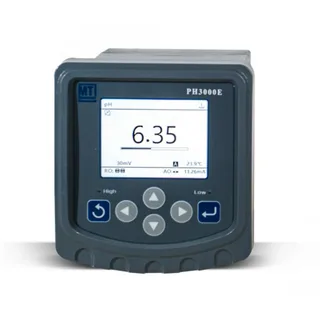
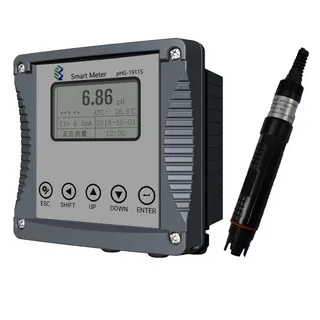
Online pH transmitters typically consist of a robust transmitter unit mounted on a panel or DIN rail and a pH sensor (electrode) placed directly in the water or in a bypass flow chamber. The pH sensor generates an electrical signal proportional to the hydrogen ion activity in the liquid, which the transmitter conditions, temperature‑compensates, and converts into standardized outputs. Most industrial models support 4–20 mA analog output, enabling connection to PLC/SCADA systems, and many also offer digital communication protocols such as Modbus RTU or RS‑485 for more advanced integration and data exchange.
Modern online pH transmitters are engineered for durability in harsh industrial environments — including wet, humid, and chemically aggressive locations found in raw water intakes, neutralization tanks, clarifiers, and effluent monitoring points. They often include features such as three‑point calibration, automatic temperature compensation, high/low alarms, relay outputs, and rugged enclosures (e.g., IP65 or higher) to ensure reliable long‑term operation with minimal maintenance. In a SCADA system, the real‑time pH data are visualized on operator dashboards, where trend graphs, alarm histories, and setpoints are monitored continuously. If the pH value drifts outside predefined safe limits, the SCADA logic can automatically adjust chemical dosing pumps (acid or base), open/close valves, or send alerts to maintenance engineers. Historical pH data stored in the SCADA historian can be used for reporting, process optimization, and regulatory compliance documentation, demonstrating the performance of the treatment process over time.
Online pH/ORP Meter SUP‑pH6.0 Datasheet (PDF) https://www.dicofiltro.pt/uploads/catalogo/ficheiros/1706451426_9470_DICOFILTRO_TRANSMISSOR_PH_SUP-pH6.0.pdf