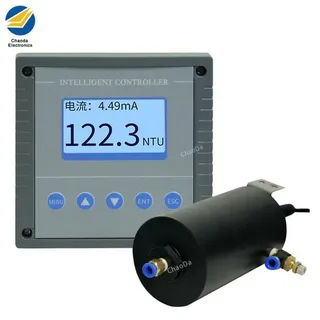
Product Overview
The device typically operates on the nephelometric principle, measuring light scattering caused by suspended particles in the water. Light emitted from a source passes through a sample and is scattered by particles, with a detector measuring the intensity of the scattered light at a specific angle, usually 90°. The output is proportional to the turbidity level in NTU (Nephelometric Turbidity Units), which can then be transmitted via 4–20 mA analog signals or digital protocols such as Modbus RTU or HART for integration into SCADA systems
Turbidity analyzers are designed to operate continuously in harsh environments, including raw water, clarified water, effluent streams, and highly corrosive or suspended solids-laden process fluids. Many models include automatic cleaning mechanisms, diagnostic features, and calibration capabilities to maintain accuracy over long-term operation with minimal maintenance. They are typically installed at critical points such as post-clarification, post-filtration, and effluent discharge monitoring. (Hach
)
Integration with SCADA systems enables operators to monitor real-time turbidity trends, set high/low alarms, and trigger automated control actions, such as adjusting coagulant dosing, backwashing filters, or diverting water flows. Historical data can be archived for regulatory reporting, performance optimization, and troubleshooting process deviations. Accurate turbidity monitoring supports public health protection, regulatory compliance, and efficient water treatment operations.
Hach 2100Q Turbidimeter Datasheet (PDF) https://www.hach.com/asset-get.download.jsa?id=7639988636