Product Overview
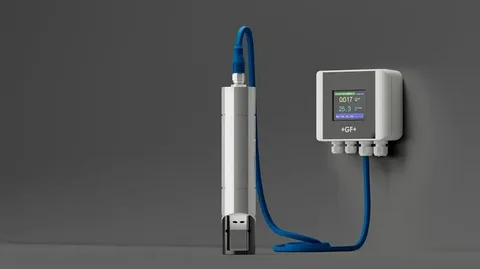
Turbidity sensors typically employ nephelometric principles, measuring light scattered by particles in the water at a specific wavelength and angle. The sensor converts the light scattering into an electrical signal proportional to turbidity levels, expressed in Nephelometric Turbidity Units (NTU). Modern sensors are designed for continuous, online measurement, and can operate in harsh conditions such as high flow rates, high particle load, and chemically aggressive environments.
In SCADA architectures, turbidity sensor signals are transmitted to PLCs or RTUs via 4–20 mA analog outputs, Modbus RTU, HART, or other industrial protocols. The SCADA system displays the data on operator dashboards, logs historical trends, triggers alarms when turbidity exceeds safe thresholds, and can initiate automated control actions such as coagulation dosing, filter backwashing, or diversion to bypass systems. Continuous monitoring is particularly important for post-filtration water, raw water intake, or treated effluent discharge, where regulatory compliance and public health are critical.
Hach Turbidity Sensor – Product Datasheet (PDF) https://www.scinteck.com/uploads/1/9/7/6/19761741/hach_2100q_turbidimeter_series_ds.pdf